Why a hardstuck Marvel Rivals player in 2026 is usually a self-diagnosis problem
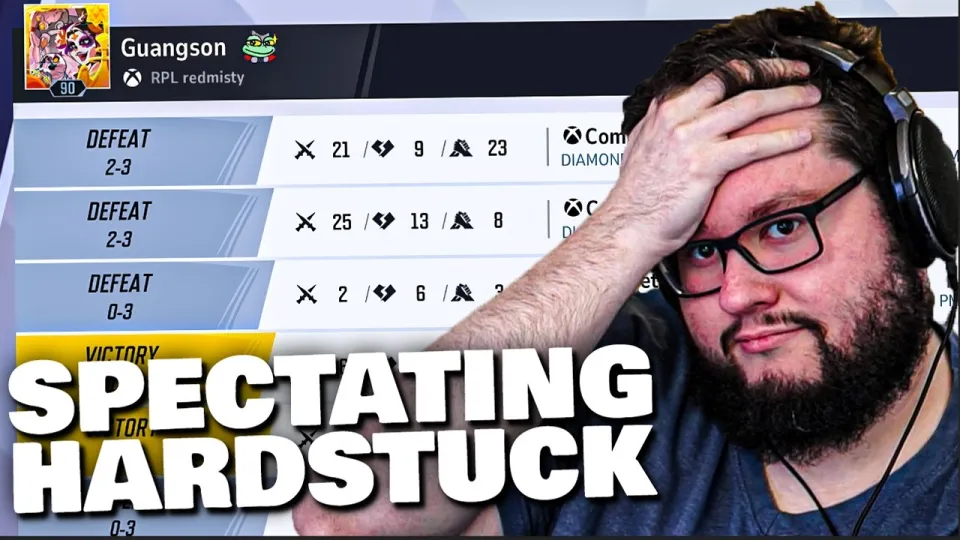
Video: I Spectated Someone Who Claimed To Be Hardstuck In Marvel Rivals
Want articles like this for your own video to promote it on YouTube and Google? Order them through the Telegram bot @sat_sit_bot. The bot writes and publishes the articles itself (with your YouTube video embedded) on popular topical websites (no ads). Try it free: 50 articles on us.
· based on the channel Flats
Key takeaways
- Flats spectated a Marvel Rivals player in Grandmaster who insisted his rank was caused by teammates, not his own play.
- The player ran Cloak & Dagger but spent most of the match as Dagger, leaving Cloak's damage and escape tools unused.
- He walked past a health pack while looking for healing, a detail Flats highlighted without commentary.
- The account was described as climbing with a negative win rate, which viewers linked to ego rather than skill.
- Flats' verdict style is direct: he names the specific decisions that cost fights instead of accepting the 'hardstuck' framing.
A Marvel Rivals player is "hardstuck" when their rank stops moving for dozens of matches while their own decisions stay the same, and the most common cause is not teammates but a hero played at half its kit. That is the pattern Flats ran into when he spectated a Grandmaster player who insisted the game was holding him back: the account sat in GM, the win rate was negative, and the gameplay showed a Cloak & Dagger who almost never became Cloak. Anyone who wants to watch these live audits as they happen can follow along on Flats' Twitch channel, where the spectate sessions and ranked climbs are streamed.
What the Marvel Rivals hardstuck spectate actually showed
The session followed a single player through a full match while Flats watched from outside the fight, pausing to point out decisions rather than outcomes. The player opened by claiming his rank was stuck because of the teams he was given, a claim that is common in Marvel Rivals ranked queues and easy to test once someone else is driving the camera.
What the spectate revealed was not a player being dragged down. It was a player making the same small errors every fight:
- Playing Cloak & Dagger as a pure healer, staying in Dagger form for nearly the entire match and never using Cloak's damage window or the phase-out escape.
- Walking past a health pack while actively looking for healing, a moment Flats let sit in silence rather than narrating.
- Ultimates used after the fight was already decided, including a Magneto ult that whiffed and left the character standing in open ground.
- Positioning behind the tank line as a support, which turned every enemy dive into a free kill.
The rank on the account was Grandmaster, which is what made the clip land with viewers: the mistakes were not beginner mistakes, they were habits that had been reinforced over hundreds of games.
Cloak & Dagger is two heroes and most players use one
The single biggest fix in this Marvel Rivals match was mechanical, not strategic: Cloak & Dagger is a stance-swap support and playing only Dagger deletes half the kit. Dagger provides the healing projectiles, the healing wall and the blinding veil. Cloak provides the damage beam, the invisibility field that makes allies untargetable, and Terror Cape, which applies vulnerability to enemies caught in it.
A support who never swaps is leaving three tools on the table:
- Escape: Cloak's phase ability is the answer to dive, and it is on a short enough cooldown to use every fight.
- Setup: Terror Cape multiplies the damage of every duelist on the team, which matters more in Grandmaster than raw healing output.
- Survival: Cloak's invisibility field can save a caught ally or reset a losing fight.
The player in the spectate treated the swap as optional. In practice, a Cloak & Dagger who never becomes Cloak is roughly a heal-bot with a long cooldown ult, and that is exactly the profile that plateaus in high elo.
Why negative win rate climbing is a red flag in Marvel Rivals
A negative win rate at a high rank means the account is being carried by the matchmaking system, not by the player. Marvel Rivals, like most team shooters, hands out rank progress for wins and takes less for losses in some brackets, and seasonal resets plus placement softness can push an account higher than its skill level. When that happens, the player experiences harder lobbies, blames teammates, and the gap between self-image and performance widens.
The comments under the spectate circled this exact point: players described meeting this profile at 99/100 toward a rank-up, or wishing for this opponent on the enemy team every game. The uncomfortable version of the lesson is that a lucky climb is not proof of improvement, and the only reliable signal is whether your own decisions change between losses.
The ego problem behind the hardstuck label
Calling yourself hardstuck is a conclusion, not a diagnosis, and it usually arrives before any review of your own gameplay. In this session the player arrived with the conclusion already written: the teams were the problem. That framing makes every piece of advice invisible, because each mistake gets re-read as someone else's fault.
Flats' approach in these audits is to skip the argument and show the footage. A whiffed ultimate, a health pack ignored, an escape tool unused for twenty minutes of game time, all of it is harder to dispute than a rank graph. The viewers' reaction was blunt: several noted that the player had accidentally proven teammates can hold you back, just not in the way he meant, and others pointed out that a name change was probably incoming.
If you want to test the same thing on yourself, the method is simple:
- Record three ranked losses in a row.
- Count how many times you used every ability on your hero, not just the primary one.
- Note every death where an escape or a health pack was available and unused.
- Compare the count across the three games. If the number is stable, that is your plateau, not your team's.
Typical viewer questions about Marvel Rivals ranked climbs
Viewers watching the spectate kept returning to the same doubts, and they are worth answering directly. The first is whether Grandmaster in Marvel Rivals is genuinely high: it is, and that is why a GM player making basic kit errors is more instructive than a Bronze one, because the habits survived hundreds of wins. The second is whether the matchmaking is rigged against solo players. It is not rigged, but it is noisy, and a negative win rate over a large sample is a signal about the player, not the algorithm.
The third recurring question is whether one-tricking a support is viable. It is, but only if the one trick uses the full kit; a Dagger-only Cloak & Dagger is not a one trick, it is a partial hero. The fourth is whether swapping heroes mid-match fixes a plateau. Sometimes, but the errors in this session followed the player across characters, which means the fix is decision-making, not the select screen.
Where to find the full Flats links
All of Flats' channels and community links from the broadcast are collected here:
- Twitch: https://www.twitch.tv/flats
- Discord: https://discord.gg/flats
- Twitter: https://twitter.com/Flats_Ow
- TikTok: https://www.tiktok.com/@flats_ow
- Facebook: https://www.facebook.com/FlatsTTV
The takeaway from the Marvel Rivals hardstuck spectate
The player in this Marvel Rivals spectate was not held back by his teams; he was held back by playing half a hero and refusing to review his own decisions. Flats, who built the breakdown, does this kind of audit regularly, and the format works because the footage answers the argument that chat cannot. If you recognize the Dagger-only habit, the health-pack detour or the post-fight ultimate in your own games, you have found your plateau without needing anyone to spectate you. Watch the next live session on Flats' Twitch stream and run the same test on your own replays.
Source: I Spectated Someone Who Claimed To Be Hardstuck In Marvel Rivals · Markdown version
Questions & answers
Is Grandmaster actually a high rank in Marvel Rivals?
Yes. Grandmaster sits near the top of the ranked ladder, above Diamond and below the highest tiers, so a GM player is expected to know their hero's full kit. That is why the spectate was so striking: the errors were habits, not inexperience, and they had survived hundreds of matches.
Does Marvel Rivals matchmaking hold solo players back?
Matchmaking adds variance, especially around rank resets and rank-up thresholds, but it does not target individual accounts. A negative win rate over a large sample usually reflects the player's own decisions. Reviewing three losses for unused abilities and avoidable deaths is a faster answer than blaming the queue.
Should Cloak & Dagger players stay in Dagger form?
No. Dagger covers healing, while Cloak brings the damage beam, the vulnerability debuff and the invisibility field that can save allies or escape a dive. Swapping situationally is what makes the hero strong; staying in Dagger for a whole match deletes half the kit.
What does hardstuck mean in Marvel Rivals?
Hardstuck describes a rank that stops moving over dozens of games while the player's decisions stay identical. It is a description of a plateau, not a diagnosis. The fix usually starts with recording losses and counting unused cooldowns, missed health packs and post-fight ultimates.