Warzone, How 50 Iridescents Took On Streamers in the Iri Invitational
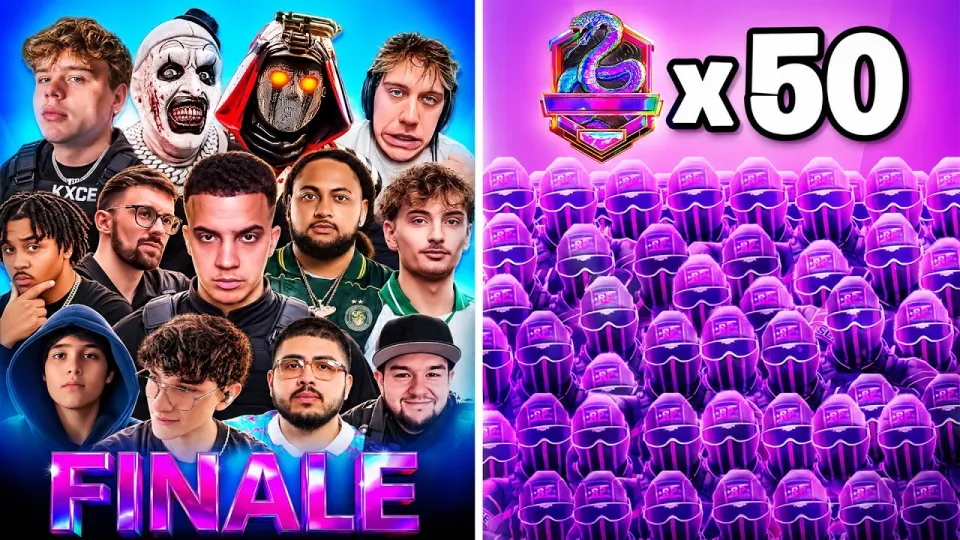
Video: Can 50 Iridescents Defeat STREAMERS? (FINALE)
Want articles like this for your own video to promote it on YouTube and Google? Order them through the Telegram bot @sat_sit_bot. The bot writes and publishes the articles itself (with your YouTube video embedded) on popular topical websites (no ads). Try it free: 50 articles on us.
· based on the channel Swagg
Key takeaways
- The Iri Invitational ran six games of Warzone ranked solo customs on Rebirth Island.
- A $2,000 prize pool was split among the winners of the first edition.
- The streamer side included Shifty, Hisoka, JoeWo, Metaphor, Kxce, Diablo, Dongy, Kenner and Ketchup.
- Roughly 50 Iridescent-ranked players filled the lobbies alongside the invited creators.
- The finale aired on Swagg's channel on 12.10.2026 and covers all POVs.
Warzone's ranked ladder and its biggest creators rarely share a lobby, which is exactly the gap the Iri Invitational was built to close: 50 Iridescent-ranked players were dropped into Rebirth Island ranked solo customs against a roster of well-known streamers, with $2,000 on the line across six games. Swagg hosted the finale and published all POVs, and you can follow his live shows and future installments on his Twitch channel. The short answer to whether Iridescents can beat streamers is yes — but only when the format, the map and the drop spots line up in their favor.
What the Iri Invitational actually is
The Iri Invitational is a custom-lobby tournament format that measures ranked skill against creator reputation rather than a standard pro bracket. Ranked solo on Rebirth Island rewards positioning, rotations and third-party awareness as much as raw aim, so a lobby of Iridescent grinders is a genuinely hostile environment for anyone used to playing for content. Six games were played back to back, each one a fresh solo custom, and the broadcast cut between multiple player perspectives so viewers could watch the same fight from both sides. The prize pool was $2,000, small by esports standards but enough to make every placement and every kill count toward the final standings.
The players: streamers, grinders and one very loud controversy
The invited creator side reads like a Warzone highlight reel: Shifty, Hisoka, JoeWo, Metaphor, Kxce, Diablo, Hero, Dongy, Kenner and Ketchup, with Swagg himself in the mix and a long list of community names filling out the rest of the lobby. The Iridescent contingent came from ranked solo queues, which means most of them arrived with better Rebirth rotations and more patience than the creators. Two storylines dominated the chat: Metaphor's unusually clean shot and smart smoke usage on mouse and keyboard, and the persistent suspicion around Kenner, which the broadcast addressed with a dedicated segment asking outright whether he was cheating. The clip-driven debate that followed is the most predictable outcome of putting a high-suspicion player in front of a ranked audience.
How the six games played out
The match flow followed a familiar ranked-solo rhythm rather than a kill-race. Early games were about survival and loadout timing, with Iridescent players holding power positions on Rebirth and forcing streamers into uncomfortable third-party fights. As the series progressed, the creators adapted — pushing earlier, contesting loadout drops and using the buy stations more aggressively — while the ranked grinders leaned on endgame discipline. Late in the series, a single strong performance from Ketchup swung momentum and became one of the most replayed moments of the finale. The result was a series that stayed close enough that no single game decided it, which is exactly what a format like this needs to stay watchable.
Why Rebirth Island ranked solo is the right battleground
Rebirth Island is the closest Warzone gets to a pure skill test at small scale. The map is compact enough that rotations matter within seconds, respawns keep lobbies full, and the ranked solo ruleset punishes reckless aggression with immediate placement losses. For an invitational, that means:
- Ranked players get to use map knowledge they've built over hundreds of solo queues.
- Streamers can't rely on squad carries or content-friendly pushes.
- Every fight is visible to multiple POVs, which makes the broadcast easy to follow.
- Placement points reward patience, so the standings stay tight across six games.
The questions viewers kept asking
Three concerns came up repeatedly in the comments under the finale. First, whether the format is fair when a handful of players carry cheating suspicions into a cash event — the broadcast's own on-screen segment shows the organizers knew it was a talking point. Second, why some notable names, including Biffle and Booya, weren't in the lobby; the honest answer is that an invitational is invite-only, and the roster will always be a snapshot rather than a complete ranking of the scene. Third, why some competitors left early after a rough game, which viewers read as a bad look for a paid event. None of these are format-breaking, but all of them are the kind of thing a second edition should address with clearer rules, published invite criteria and a full-series commitment.
What the finale says about Warzone content in 2026
Custom-lobby events have become the most reliable way to make Warzone interesting again. Standard ranked queues produce endless near-identical matches, while a curated lobby of named players creates stakes, rivalries and clips in a single sitting. The Iri Invitational works because it borrows the structure of a real tournament — fixed games, a prize, multiple POVs — without the overhead of a full production. It also gives ranked grinders a stage they'd never get through normal matchmaking, which is why the audience response pushed so hard for the series to become an annual fixture and for a LAN-style follow-up where suspicious performances can be settled in person.
Useful links
- Swagg on Twitch — live streams and future invitationals
- FaZe Clan Nuke Squad merch
- Swagg's Discord — community and event announcements
- Swagg on Twitter
- Swagg on Instagram
Bottom line
The Iri Invitational proved that ranked Iridescent players can hold their own against Warzone's biggest creators when the format is solo, the map is Rebirth Island and the rules reward discipline over highlight chasing. Six games and a $2,000 prize produced a closer series than most viewers expected, plus the two debates that will define the next edition: how to handle cheating suspicions and how to widen the invite list. Swagg's channel is the place to watch the full finale with all POVs, and following him live on Twitch is the fastest way to catch the next one.
Source: Can 50 Iridescents Defeat STREAMERS? (FINALE) · Markdown version
Questions & answers
Did the Iridescent players actually beat the streamers in the Iri Invitational?
Yes — the ranked grinders held their own and took games off the creator side across the six-game series. Rebirth Island ranked solo removes most of the advantages streamers normally get from squad play, so map knowledge and endgame discipline carried a lot of weight.
Was Kenner cheating during the finale?
No proof was shown; the broadcast raised the question with a dedicated segment and viewers split on it. That suspicion is why so many people asked for him to be tested at a LAN event, where setups and connections can be controlled.
Why weren't Biffle and Booya in the lobby?
The event was invite-only, so the roster reflected the organizers' picks rather than a full ranking of the scene. Viewers pushed for both names to be added if the series returns for another edition.
How much money was on the line and how was it won?
The prize pool was $2,000, awarded based on performance across six Warzone ranked solo custom games on Rebirth Island. Placement and kills both mattered, which kept the standings close until the final games.